

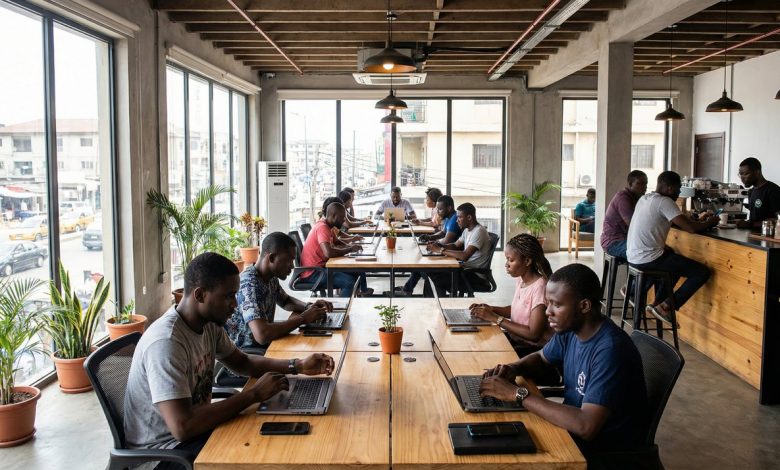
Ten years ago, the idea that Africa would become a serious player in the global technology industry seemed optimistic at best. Today, it is simply a fact. From Lagos to Nairobi, Cairo to Cape Town, a generation of African entrepreneurs is building companies that are solving real problems at real scale, attracting serious international investment, and reshaping what the world thinks is possible on the continent.
Here is a look at the trends and companies that are defining Africa’s tech moment in 2026.
Fintech Still Leads
Financial technology remains the dominant sector in African tech. The reason is simple: hundreds of millions of Africans are unbanked or underbanked, and mobile phones have given startups a way to reach them directly, without the overhead of physical bank branches.
Nigeria’s Flutterwave and Kenya’s M-Pesa (operated by Safaricom) remain the anchor companies of African fintech, but the ecosystem around them has expanded dramatically. Payment, lending, insurance, and investment products are being built at every level of the market. Egypt’s MNT-Halan, which serves micro-entrepreneurs with credit and payments, and South Africa’s TymeBank, a fully digital bank serving lower-income customers, are among the companies attracting the largest rounds of funding.
Healthtech: Solving Africa’s Healthcare Gap
Africa faces a severe shortage of doctors, nurses, and hospital infrastructure. It also has some of the fastest-growing populations in the world. The combination has created an urgent and enormous market for health technology solutions.
Startups like Nigeria’s Helium Health, which provides hospital management and electronic medical record systems, and Kenya’s mPharma, which manages pharmaceutical supply chains across multiple African countries, are building the infrastructure the continent’s health system needs to function. Telemedicine platforms have also grown rapidly, allowing patients in rural areas to consult doctors remotely.
Agritech: Feeding the Continent Smarter
Agriculture employs more people in Africa than any other sector, yet African farmers remain among the least productive in the world. Poor access to inputs, credit, market information, and post-harvest storage means much of what is grown is wasted or sold at low prices.
Agritech startups are attacking these problems from multiple angles. Kenya’s Apollo Agriculture uses satellite data and machine learning to assess credit risk for smallholder farmers, then offers them fertilizer on credit and sells their harvest at better prices. Nigeria’s Releaf is building processing infrastructure for agricultural commodities. Ghana’s Farmtrace uses IoT sensors to monitor livestock health. The sector is attracting significant investor attention as food security rises up the global agenda.
The Infrastructure Layer
Behind every consumer-facing startup is an infrastructure layer that makes it possible. Africa’s data centre and cloud infrastructure market is growing fast, driven by increasing internet penetration and the demands of startups that need reliable, local hosting. Companies like Equinix and local players like Rack Centre in Lagos are expanding their capacity.
Connectivity is improving too. The submarine cable systems linking Africa to Europe, Asia, and the Americas have multiplied over the past decade, and satellite internet services are expanding broadband access in rural areas that terrestrial networks struggle to reach.
Where the Money Is Going
African tech startups raised over $3 billion in venture capital in 2024, down from the peak years of 2021 and 2022 but still representing a fundamental shift from a decade ago when the total was a fraction of that. Nigeria, Kenya, Egypt, and South Africa continue to attract the largest share of investment, though markets like Ghana, Senegal, and Morocco are seeing growing interest.
The exit market is still developing. There have been relatively few large acquisitions or IPOs of African startups, which remains a challenge for venture investors who need liquidity. But the foundations are being built, and the pace of innovation across the continent shows no sign of slowing.
For the young Africans building these companies, the question is no longer whether it is possible. It is how fast they can go.