

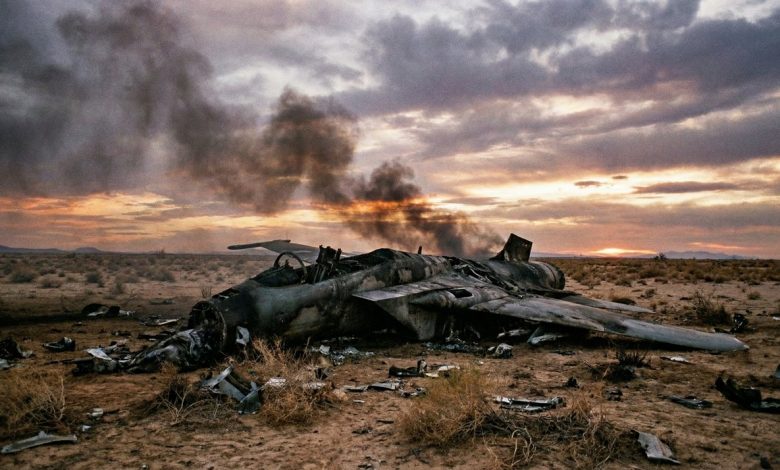
It is the most serious military incident since the United States and Iran entered open conflict more than a month ago. On April 3, 2026, Iran shot down an American F-15E Strike Eagle over Iranian territory. The Islamic Revolutionary Guard Corps claimed responsibility, saying it used a new air defense system to bring down the aircraft. One pilot was rescued by US forces who entered Iranian territory to extract him. The second pilot is still missing, and Iran has announced a reward for anyone who delivers him alive to Iranian authorities.
What Happened
Both crew members ejected after the aircraft was hit. US search and rescue operations, involving C-130 aircraft and Apache helicopters, were spotted flying at low altitude over central and southwestern Iran. The Pentagon confirmed that one pilot had been rescued. Iran filmed and released footage of the American search and rescue operation, which spread rapidly across social media.
Iran initially claimed to have shot down an F-35 before correcting the identification to an F-15E Strike Eagle. Independent weapons analysts reviewed debris photographs published by Iran’s Tasnim News Agency, which is affiliated with the IRGC, and said the wreckage was consistent with the F-15E, though formal verification was not possible from the images alone.
A First That Changes the Calculus
This is the first time a piloted American combat aircraft has been officially confirmed shot down by Iranian air defenses since the conflict began. Previous American losses involved drones and unmanned systems. The US had publicly stated that Iranian air defenses had been “largely destroyed” in earlier strikes. That assessment is now being questioned.
The incident matters because it demonstrates that Iran retains meaningful capability to threaten manned American aircraft, which changes the risk calculation for US air operations in the region. It also provides a significant propaganda victory for Tehran at a moment when Iranian officials had been under pressure domestically.
International Reaction
Russia and Turkey issued a joint call for an immediate ceasefire in the Middle East. The US Embassy in Beirut issued a security alert warning American citizens of Iranian threats against universities in Lebanon and advised them to leave while commercial flights remain available.
President Donald Trump was briefed on the incident by the White House, according to a statement from the administration. No further military response had been announced at the time of publication.
What It Means for Africa
The Strait of Hormuz, the narrow waterway between Iran and Oman through which a significant share of the world’s oil passes, is central to this conflict. Any escalation that threatens shipping through the strait would push global oil prices sharply higher. African countries that import fuel, which includes most of sub-Saharan Africa, would face immediate cost increases that would feed directly into transport costs, food prices, and inflation.
African oil exporters like Nigeria and Angola might see short-term revenue gains from higher prices, but the broader economic disruption from a wider Middle East conflict would likely outweigh those gains. The situation is developing rapidly, and its full consequences for the continent remain uncertain.