
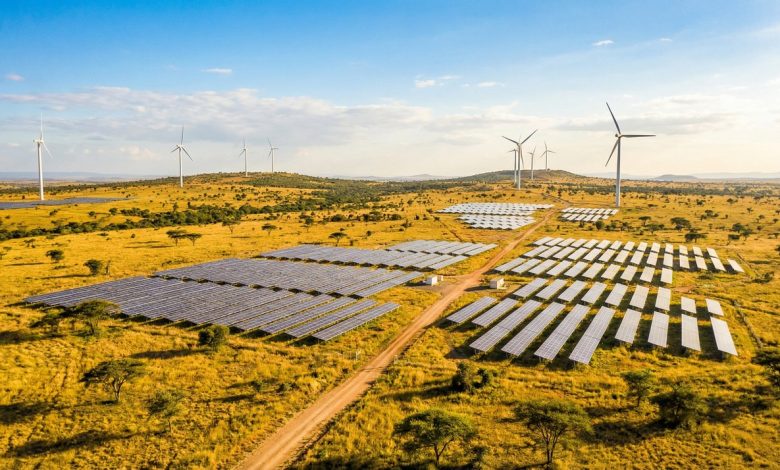
Africa gets more sunshine than almost anywhere on earth. It sits on some of the world’s largest untapped wind corridors. Its rivers hold enormous hydroelectric potential. And yet, for decades, hundreds of millions of people across the continent have lived without reliable electricity. That story is finally starting to change.
Across Africa, a clean energy revolution is underway. It is not moving fast enough for everyone, and the challenges remain enormous. But several countries are leading the way, proving that the continent does not have to follow the fossil fuel path that industrialized nations took. Here are five of the most important stories right now.
Morocco: The Solar Superpower
Morocco has made renewable energy a national priority and built the infrastructure to match. The Noor Ouarzazate solar complex in the Sahara is one of the largest concentrated solar power plants in the world. It generates enough electricity to power more than a million homes and has positioned Morocco as a serious player in the global clean energy conversation.
The country has set a target of producing 52% of its electricity from renewable sources by 2030 and is well on track. Morocco is also positioning itself as a future green hydrogen exporter, hoping to sell clean energy to Europe through undersea cables. The infrastructure investment has attracted billions in foreign capital and created tens of thousands of jobs.
Kenya: Wind, Geothermal, and a Continental Model
Kenya already generates around 90% of its electricity from renewable sources, one of the highest shares of any country in the world. The Lake Turkana Wind Power project in the north is the largest wind farm on the continent, with 365 turbines capable of generating 310 megawatts. The Rift Valley provides ideal conditions for geothermal energy, and Kenya has been exploiting that resource for decades.
The result is a country that has largely skipped over the fossil fuel dependency that others built their grids on. Kenya now exports expertise and knowledge across East Africa, and its energy sector has attracted significant investment from European and Asian development banks.
South Africa: Overcoming a Coal Legacy
South Africa’s story is more complicated. The country built its economy on coal, and Eskom, the state power utility, has struggled with decades of mismanagement and infrastructure decay that led to rolling blackouts affecting businesses and households alike. But the transition is happening.
South Africa’s Renewable Energy Independent Power Producer Procurement Programme has brought billions in private investment into solar and wind projects. The country has significant solar irradiance in the Karoo and Northern Cape, and large wind farms along the southern coastline. The challenge is managing the transition away from coal while keeping the lights on and protecting jobs in coal-dependent communities.
Ethiopia: Hydropower as a Geopolitical Asset
Ethiopia’s Grand Ethiopian Renaissance Dam on the Blue Nile is one of the most talked-about infrastructure projects in the world. When complete, it will be Africa’s largest hydroelectric dam, capable of generating over 5,000 megawatts. Ethiopia hopes to use the dam not only to power its own rapidly growing economy but to become a major electricity exporter to neighboring countries.
The project has caused significant diplomatic tension with Egypt and Sudan, who depend on the Nile’s flow. But for Ethiopia, the dam represents something deeper: energy sovereignty and the economic development that comes with it.
Nigeria: The Solar Off-Grid Revolution
Nigeria is Africa’s largest economy but has one of the most unreliable power grids on the continent. Years of under-investment, corruption, and population growth have left the national grid incapable of meeting demand. The result has been a massive, informal off-grid energy sector built on diesel generators, which are expensive, polluting, and noisy.
Now solar is changing the picture from the bottom up. Small solar home systems and mini-grids are spreading rapidly across rural and peri-urban Nigeria, often backed by international climate finance. Companies like Lumos, Rensource, and Yellow have built large businesses selling solar energy to households that the national grid was never going to reach. It is not the industrial-scale solution the country needs, but it is getting millions of Nigerians access to clean, reliable electricity for the first time.
The Bigger Picture
Africa’s renewable energy potential is extraordinary. The International Energy Agency estimates the continent has 60% of the world’s best solar resources and significant wind, hydro, and geothermal assets. The question is not whether Africa can lead the global clean energy transition. The question is whether the financing, technology, and political will can come together fast enough to make it happen at the scale the continent needs.
For millions of Africans, that answer cannot come soon enough.